
"On Côte-Nord, the boreal forest doesn't simply grow—it endures. It clings to the rock, takes root in the peat, and reaches toward the sky like a timeless poem written with needles. [...] It isn't merely visited; it must be earned."
— Charlotte Vuillemin, journalist
— Charlotte Vuillemin, journalist


Untamed wilderness
It only takes a few kilometres inland to leave the coast behind and enter the boreal forest. Spruce, fir and birch trees, peatlands and vast forested landscapes cover much of Côte-Nord. As you travel farther north, the scenery gradually transitions into taiga and subarctic environments. In Port-Cartier, for example, Taiga Park offers an easy way to experience this unique ecosystem just minutes from downtown.
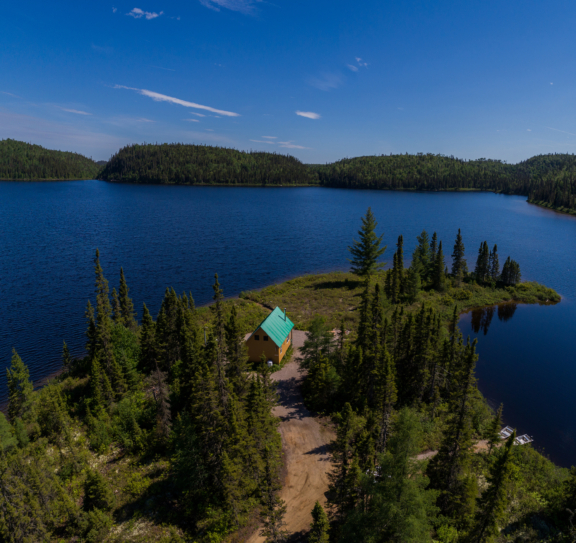
This immense forest is crossed by an impressive network of lakes and rivers. Côte-Nord is home to thousands of lakes, along with iconic rivers such as the Moisie, Manicouagan, Romaine and aux Rochers. These freshwater environments offer endless opportunities for sport fishing, canoeing, kayaking, swimming, hiking, camping, cabin stays and outfitter experiences. With its countless lakes, world-class salmon rivers and exceptional wildlife territories, Côte-Nord is recognized as one of Québec's premier fishing destinations.
Water also shapes some of the region's most spectacular scenery. Waterfalls, rapids and rivers often accompany Route 138, while the inland wilderness allows visitors to leave the towns behind and immerse themselves in remote natural landscapes. This unique proximity between welcoming communities and vast wilderness is one of Côte-Nord's defining features—you can enjoy breakfast in town and, just a few hours later, find yourself alone beside a peaceful lake in the heart of the boreal forest.

The St. Lawrence River, beaches and coastline
1,300 kilometres shaped by the sea
The St. Lawrence River is a constant companion on any journey through Côte-Nord. From Tadoussac to Blanc-Sablon, the coastline stretches for approximately 1,300 km, revealing an ever-changing landscape of sandy beaches, rocky headlands, cliffs, tidal flats, sandbars, sheltered coves, bays, archipelagos and islands. As you travel east, the St. Lawrence gradually widens from an estuary into the Gulf of St. Lawrence, taking on the character of an inland sea.
What surprises many visitors is the number of beautiful sandy beaches found along the coast. Some extend for several kilometres, offering soft sand, expansive tidal flats and spectacular views of the St. Lawrence. Pointe-aux-Outardes, Pointe-Lebel, Port-Cartier, Mingan, Natashquan, and many communities throughout Minganie and the Lower North Shore showcase this unexpected side of Côte-Nord. Swimming, beach walks, sea kayaking, stand-up paddleboarding, sailing and kitesurfing are just a few of the activities that can be enjoyed along the coast.
At the western gateway to the region, the Saguenay Fjord meets the St. Lawrence near Tadoussac. Carved by glaciers, this 100-kilometre-long fjord features dramatic cliffs and deep waters, where fresh water flowing from Lake Saint-Jean overlies a dense layer of salt water from the St. Lawrence. The result is one of Québec's most spectacular natural landscapes.
At the opposite end of the region, the Lower North Shore offers an even closer connection to the sea. Several coastal communities are accessible only by boat or plane, making the water an essential part of everyday life. In spring, icebergs may drift through the Gulf of St. Lawrence, while summer brings exceptional opportunities for sea kayaking, canoeing, fishing and hiking through landscapes where tundra, islands, the sea and coastal villages come together.
Must-do experiences: stroll barefoot along a sandy beach, paddle a sea kayak, cruise between islands, watch the tides, follow the Whale Route, or discover the unique communities of the Lower North Shore by sea.

Wildlife, nature and local flavours
Where nature meets the table
Côte-Nord is one of Québec's premier destinations for wildlife watching. In the St. Lawrence Estuary and Gulf, tides, currents and underwater topography create nutrient-rich waters that support an extraordinary diversity of marine life. The region is home to 13 species of whales and dolphins, including the blue whale, humpback whale, minke whale and the iconic St. Lawrence beluga. Three species of seals are also regularly seen along the coast.
Birdlife is equally impressive. Seabirds, migratory birds and boreal forest species can be observed in wetlands, on islands, along tidal flats and throughout the boreal forest. In the Mingan Archipelago, thousands of seabirds nest each year, including the colourful Atlantic puffin, Arctic terns and common eiders. At Pointe-aux-Outardes Nature Park, visitors can explore nine distinct ecosystems within a single protected area.
Nature can also be discovered through its flavours. Wild blueberries, cloudberries, lingonberries, haskap berries, crowberries and other northern berries grow throughout the region and are transformed into jams, chocolates, beverages, desserts and gourmet local products. On the Lower North Shore, the tundra produces an abundance of cloudberries, crowberries, lingonberries, blueberries and raspberries.
Beyond its forests and rugged coastline, Côte-Nord is also home to a thriving agricultural sector. Locally grown vegetables, potatoes, berries and non-timber forest products contribute to a rich regional food culture that reflects the diversity of the land.
This unique combination of forest, sea and farmland is reflected in the region's cuisine. Fresh seafood, fish, wild berries, boreal plants and locally grown produce come together to create authentic flavours that can be enjoyed by visiting local producers, public markets, gourmet shops and restaurants.
Must-do experiences: watch whales from shore or at sea, spot seals, photograph seabirds, taste wild berries, visit local producers, and savour the fresh seafood and boreal flavours of Côte-Nord.

Geology and landscapes
Hundreds of millions of years beneath your feet
Côte-Nord is a vast open-air geology museum, where ancient rocks, fossil-rich limestone, glacial landscapes and dramatic coastal scenery reveal the Earth's remarkable history. Across the region, the Canadian Shield, towering cliffs, sandy beaches, islands and rock formations shaped by erosion create an ever-changing landscape unlike anywhere else in Québec.
One of the region's most spectacular geological treasures is the Mingan Archipelago National Park Reserve of Canada. Its limestone formations, more than 450 million years old, contain countless marine fossils from an ancient tropical sea. Over thousands of years, waves, wind, frost and ice sculpted these rocks into the famous Mingan monoliths, the largest concentration of their kind in Canada.
A boat excursion to Quarry Island or Niapiskau Island offers an extraordinary opportunity to experience this geological history firsthand. Limestone cliffs, fossils, monoliths, peatlands, heathlands, sandy beaches and boreal forest can all be explored in a single outing. Farther east, the landscape changes once again, with nearly 1,000 granite islands, islets and reefs scattered across the eastern section of the archipelago.
Anticosti Island tells another chapter of Earth's story. Designated a UNESCO World Heritage Site in 2023, it preserves the world's most complete and best-preserved fossil record of the first mass extinction of animal life, which occurred approximately 447 to 437 million years ago. Its cliffs and rock layers reveal exceptional fossils from an ancient tropical sea, making Anticosti one of the world's most important geological sites.
At the western gateway to Côte-Nord, the Saguenay Fjord offers a completely different landscape. Carved by glaciers and later flooded by the sea, this spectacular fjord is known for its towering cliffs, great depths and dramatic scenery—clear evidence of the immense forces that shaped the region during the Ice Age.
Throughout Côte-Nord, visitors can also discover countless traces of glaciation and erosion, including polished bedrock, glacial grooves, rocky headlands, pebble beaches, sand dunes and glacial erratics. Near Ragueneau, for example, glacial striations carved into the rock remain clearly visible, preserving the path of the ancient ice sheets.
Exploring these landscapes is more than sightseeing—it's a journey through hundreds of millions of years of Earth's history, from the ancient rocks of the Canadian Shield to the monoliths of Mingan, the cliffs of the Saguenay Fjord, and the fossil-rich shores of Anticosti Island.
Must-do experiences: walk among the Mingan monoliths, discover Anticosti Island, observe glacial landforms, and explore the trails leading to spectacular cliffs, headlands and unique rock formations.
Outdoor experiences
-

-

Cruises and Excursions
-

Controlled Zones (ZECs)
-

Trails
-

Cycling and FatBike
-

Outdoor Recreation and Adventure
-

Winter Activities
-

Snowmobiling
-

Beach
-

Nature Observation and Interpretation
-

Quad - VTT
-

skiing and snow sports
-

Hunting and Fishing
-

Excursions/Adventures
-

Resorts
-

Horseback Riding
-

Parks, Gardens, Natural Sites, and Rest Areas
-

National Parks
-
Outfitters
-

Water Sports Activities


Ready for your trip?

Côte-Nord Map
Download the Côte-Nord map

Official Côte-Nord Tourist Guide
Download the Côte-Nord Tourist Guide

Côte-Nord Tourist Information Offices
Visit tourist information centres during your trip.

Côte-Nord Restaurants
Browse the list of restaurants on Côte-Nord.

Côte-Nord Accommodations
Find a campground or accommodation for your trip.

Côte-Nord Clothing and Souvenir Shop
Shop Tourisme Côte-Nord merchandise and wear it with pride!