

Outdoor Adventures on the Côte-Nord
-

-

Golf
-
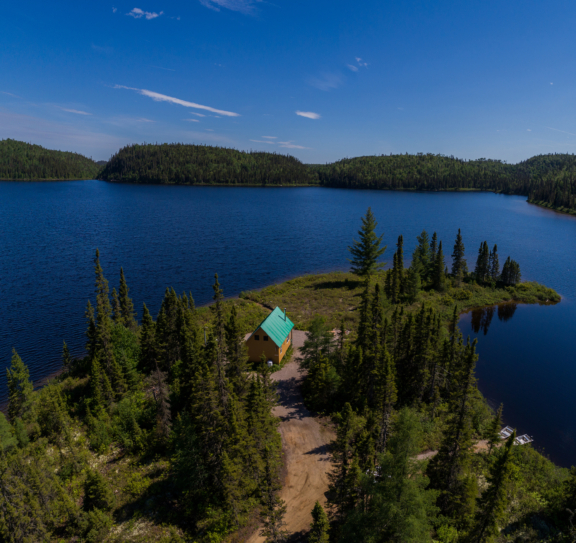
Outfitters
-

Controlled Zones (ZECs)
-

Snowmobiling
-

Trails
-

Cruises and Excursions
-

Winter Activities
-

National Parks
-

Beach
-

skiing and snow sports
-

Hunting and Fishing
-

Horseback Riding
-

Cycling and FatBike
-

Parks, Gardens, Natural Sites, and Rest Areas
-

Excursions/Adventures
-

Water Sports Activities
-

Outdoor Recreation and Adventure
-

Resorts
-

Quad - VTT


What Makes the Côte-Nord So Spectacular

A Vast and Unique Territory
Here, landscapes unfold on a grand scale: the St. Lawrence River, beaches and boreal forest, rivers, lakes, bays, islands and coastal villages stretch for hundreds of kilometres.
Each area has its own atmosphere, from the maritime charm of the Haute-Côte-Nord and the wide-open spaces of Manicouagan to the northern roads of Caniapiscau, the beaches of Sept-Rivières, the islands and monoliths of Minganie, and the unique character of the Lower North Shore. The territory’s originality and breathtaking views stay with you throughout your journey.

A Getaway to Restore Your Balance
On the Côte-Nord, renewal comes from a direct connection with immensity. Wide-open spaces, the St. Lawrence, the boreal forest, beaches and silence create a natural distance from stress, mental overload and the pace of daily life. Here, your gaze travels farther, your breathing slows, your body begins to move again and your mind finds room to breathe. Walking along the St. Lawrence, listening to the wind, watching whales or simply pausing before a landscape brings a deep sense of serenity, as though the land itself were inviting you to let go.
The Côte-Nord offers an environment made for truly disconnecting: less noise, fewer distractions and more presence. Contact with nature helps slow the flow of thoughts, ease inner tension and restore a sense of grounding. Whether you stay in a cottage, hike through the forest, pause on a beach, spend a night beneath the stars or contemplate the St. Lawrence, every experience becomes an opportunity to reconnect with yourself. Here, nature asks nothing of you; it simply leaves room to breathe, reflect, feel and be.
The Côte-Nord is therefore an ideal place for meditation, mental rest, reconnection and well-being. In a territory this vast, serenity is found both in the landscapes and in the pace of the journey: take your time, stop often, listen to the silence, watch the light, breathe in the salt air and gently return to what matters most.

A Playground for Explorers
The Côte-Nord is an ideal destination for curious travellers who enjoy discovering a region in depth. With scenic roads, beaches, boreal forests, rivers, mountains, islands, coastal villages and northern areas, the region offers countless opportunities to explore nature at your own pace. Visitors can observe whales, seals, seabirds, land animals, boreal plants and the natural environments unique to the Côte-Nord shoreline.
Geology is also part of the experience, particularly through the monoliths of the Mingan Archipelago, cliffs, beaches, ancient rocks, canyons and landscapes shaped by the sea. Curiosity is essential to making the most of the Côte-Nord: taking time to stop, ask questions, visit interpretation centres, read the signs at natural sites and learn about the region’s distinctive features helps reveal what makes this territory so unique.

Warm and Friendly People
Côte-Nord hospitality is an integral part of the travel experience. Here, visitors discover more than landscapes: they meet people who know their region, take pride in it and enjoy sharing it.
At tourist information offices, accommodations, restaurants, shops and businesses, on guided activities and in villages, the welcome stands out for its simplicity, availability and authenticity. People take the time to answer questions, offer advice, point you in the right direction and often share a little about the place: a beach not to miss, a good place to eat, a quiet lookout, a precaution to take on the road or a local story that adds meaning to the journey. This human connection helps visitors feel supported in a vast and sometimes unfamiliar region. On the Côte-Nord, hospitality is rooted in personal contact, regional pride and the pleasure of sharing a destination experienced as much through its landscapes as through its people.
Wide-Open Spaces to Discover

The Tadoussac Dunes
The Tadoussac Dunes are one of the most surprising landscapes on Côte-Nord. Despite their name, they are actually ancient marine terraces formed after the glaciers melted approximately 10,500 years ago. This rare and fragile sandy landform creates a striking contrast between the sandy slopes, the boreal forest, and views of the Saguenay Fjord.
The site is also renowned for observing migratory birds in spring and fall, as well as for rare northern plant species such as Hoppner’s sedge. It is an ideal place to understand how glacial history, wind, sand, and the St. Lawrence shaped the gateway to Côte-Nord.

The Manicouagan Peninsula
The Manicouagan Peninsula stands out for its succession of coastal environments: beaches, tidal flats, dunes, estuaries, riverside villages, and vast open spaces exposed to the wind. Arriving via Route 138, travellers pass through the Innu community of Pessamit before reaching the peninsula, which is well known as an excellent area for wind sports.
Between Ragueneau and Pointe-Lebel, the Route des plages is particularly appealing to families, cyclists, walkers, and travellers looking for easy access to the shoreline. Farther east, Baie-Comeau adds an urban, heritage, and hydroelectric dimension, while Baie-Trinité introduces a more panoramic Côte-Nord, with rocky headlands, lighthouses, beaches, and sweeping maritime horizons.

The Ragueneau Archipelago
The Ragueneau Archipelago is a small coastal world at the mouth of the Rivière aux Outardes, where the St. Lawrence, tidal flats, islands, and currents create a vibrant natural environment. From the wharf and the Sentier de la Fascine, visitors can observe the archipelago, birds, seals, and sometimes marine mammals directly from shore. You may even spot dinosaurs!
The area also holds geological significance, with visible traces left by glaciers, including grooves carved into the rocks. The approximately 1-km Sentier de la Fascine and the Sentier de la Rivière-aux-Rosiers, with its waterfall and spruce canopy, offer an opportunity to discover a landscape where the estuary, forest, and geology come together on a human scale.

The Panoramas
Travel across the heights of the Laurentian Plateau between Baie-Comeau and Baie-Trinité, along cliffs overlooking the St. Lawrence.
The Panoramas sector, between Franquelin, Godbout, and Baie-Trinité, is one of the best places to appreciate the relationship between the road, the landscape, and the St. Lawrence. Here, Route 138 follows a more open coastline dotted with rocky headlands, lookouts, beaches, and maritime villages.
In Franquelin, the Pointe Mistassini lookout and Sentier de la Croix offer spectacular views over the St. Lawrence. In Godbout, trails and viewpoints showcase the coastal terrain. Toward Baie-Trinité, Pointe-des-Monts adds a strong heritage dimension with its lighthouse, built in 1829–1830 on a rocky islet surrounded by water at high tide.
The area combines wildlife observation, maritime heritage, coastal geology, and vast horizons.

The Beaches of Pointe-aux-Anglais
Pointe-aux-Anglais Beach, in the Port-Cartier area, is an 11-km wild beach known for its fine sand, sweeping views of the St. Lawrence, and largely undeveloped setting.
Its significance extends beyond its natural beauty. Its name recalls the 1711 shipwreck of Admiral Walker’s fleet in the area. The nearby Musée Louis-Langlois provides an opportunity to learn more about this important chapter in regional maritime history.
The beach is therefore a place for walking, contemplation, and remembrance, connecting the vastness of the shoreline with a major historical event that shaped the identity of Pointe-aux-Anglais.

The Boreal Forest
Côte-Nord’s forest stands apart from much of Quebec because of its much higher proportion of old-growth forests and the strong presence of taiga and pure boreal forest, where fire cycles tend to be longer.
This forest is much more than a backdrop. It supports northern biodiversity, wetlands, lakes, rivers, plant species adapted to a cool climate, and remarkable birdlife. Species such as the black-backed woodpecker, white-throated sparrow, boreal chickadee, red-throated loon, and Cape May warbler illustrate the diversity of boreal, burned, coastal, and northern habitats.
The boreal forest gives Côte-Nord its profound sense of wilderness and its direct connection to the inland territory.

The Sept-Îles Archipelago
The Sept-Îles Archipelago gives the city of Sept-Îles a strong maritime identity. Made up of six islands and one peninsula, approximately 565 million years old, it naturally shelters the bay and creates an island landscape just a few kilometres from the city.
Each island offers its own discovery experience. Corossol Island is associated with migratory birdwatching, Grosse Boule Island with mariculture, and Grande Basque Island with hiking, camping, scenic viewpoints, and geology.
The archipelago is also connected to Innu history, Basque fishermen, Jacques Cartier, and the maritime development of Sept-Îles.
It is a rare example of a landscape where an industrial city, a major port, and natural islands coexist side by side.

The Groulx–Uapishka Mountains
The Groulx–Uapishka Mountains and the Manicouagan-Uapishka Biosphere Region represent one of the great natural and cultural territories of Côte-Nord’s hinterland.
Located mainly in Manicouagan, this UNESCO-recognized territory, designated in 2007, stretches from the shores of the St. Lawrence to the vast landscapes of the Manicouagan Reservoir, the Manicouagan impact structure, and the Uapishka Mountains, also known as the Groulx Mountains.
The name Uapishka means “white summits” in Innu-aimun, referring to mountains that remain snow-covered for much of the year. The range includes around thirty peaks rising above 1,000 metres and offers a landscape that is rare in Quebec, combining boreal forest, taiga, alpine tundra, lakes, rivers, and immense views over the inland territory.
The Biosphere Region lies almost entirely within the Nitassinan of Pessamit, making it an important meeting place for nature, Innu culture, research, ecotourism, hydroelectricity, and sustainable development.

The Manicouagan Reservoir
The Manicouagan Reservoir is one of the most impressive landscapes in Côte-Nord’s hinterland. Located north of Baie-Comeau, it forms an immense ring of water nicknamed the “Eye of Quebec,” visible from space, following the contours of an ancient meteorite crater approximately 100 km in diameter.
This crater, one of the world’s major impact structures, is a reminder that a meteorite profoundly shaped the territory more than 200 million years ago.
Today, the reservoir is also closely linked to Quebec’s hydroelectric history. Its waters are held back by the Daniel-Johnson Dam at Manic-5, recognized as the largest multiple-arch-and-buttress dam in the world.
Combining geology, hydroelectricity, Innu culture, boreal forest, and vast northern landscapes, the Manicouagan Reservoir is a powerful symbol of the Manicouagan-Uapishka Biosphere Region and an essential landmark along Route 389.

The Waterfalls of Côte-Nord
Côte-Nord’s waterfalls reveal a territory shaped by water, rock, and dramatic natural landforms.
In Minganie, Manitou Falls impress with their 35-metre drop and viewpoints accessible from Route 138. In Rivière-au-Tonnerre, Chutes au Tonnerre offer a short, family-friendly stop where visitors can experience the power of Côte-Nord’s rivers.
On Anticosti Island, spectacular Vauréal Falls plunge 76 metres into the heart of a remarkable limestone canyon. Farther east, Brador Falls bring another touch of wilderness to the Lower Côte-Nord.
Together, these sites reveal another side of Côte-Nord, characterized by powerful rivers, trails, canyons, and landscapes sculpted by time.

Anticosti Island
Nicknamed the jewel of the St. Lawrence, Anticosti Island is much more than a vast wilderness: it is a territory of global importance for geology and paleontology.
Inscribed on the UNESCO World Heritage List, Anticosti preserves one of the world’s finest fossil records of the first major mass extinction of animal life, which occurred between 447 and 437 million years ago.
Its rock strata document 10 million years of marine history, dating back to a time when the island lay beneath a shallow tropical sea.
This extraordinary scientific value is complemented by the spectacular landscapes of the national park: white cliffs, canyons, caves, rivers, waterfalls, salmon, seals, and thousands of white-tailed deer.
With its trails, fossils, historic ruins, and immense landscapes, Anticosti is one of Quebec’s most distinctive territories.

The Mingan Archipelago
The Mingan Archipelago is one of Côte-Nord’s most distinctive geological landscapes. Made up of around twenty islands and several hundred islets, it is home to the largest concentration of limestone monoliths in Canada.
These natural sculptures originated from ancient limestone deposits formed in an ancient sea before being uplifted, fractured, and slowly shaped by water, frost, wind, and tides.
Some of the archipelago’s rocks are more than 450 million years old and contain fossils, giving the area significant scientific value.
Alongside this remarkable geology are Atlantic puffins, seabirds, Arctic plants, marine mammals, lighthouses, and unforgettable island experiences.
Mingan is a place where the landscape itself tells the story of the sea and the passage of time.

Lower Côte-Nord
Lower Côte-Nord is an immense maritime adventure playground, ideal for travellers who enjoy venturing beyond the usual routes.
Between Kegaska and Blanc-Sablon, the territory stretches across 375 km of coastline carved by bays, coves, rivers, and colourful villages that are mainly accessible by boat or plane.
Here, exploration takes many forms: travelling aboard the Relais Nordik, walking coastal trails in Kegaska, La Romaine, Chevery, Harrington Harbour, Tête-à-la-Baleine, or Blanc-Sablon, watching icebergs from shore, travelling the scenic Route de la Chicoutai, admiring Brador Falls, discovering the lifestyle of the Coasters, or heading out on a boat or ATV excursion.
Wild, maritime, and deeply different from anywhere else, Lower Côte-Nord turns every journey into an experience of discovery.
Ready for Your Trip?

Côte-Nord Map
Download the Côte-Nord map

Official Côte-Nord Tourist Guide
Download the Côte-Nord Tourist Guide

Côte-Nord Tourist Information Offices
Visit tourist information centres during your trip.

Côte-Nord Restaurants
Browse the list of restaurants on Côte-Nord.

Côte-Nord Accommodations
Find a campground or accommodation for your trip.

Côte-Nord Clothing and Souvenir Shop
Shop Tourisme Côte-Nord merchandise and wear it with pride!